Table of Contents
Many people assume a mugshot disappears once charges are dropped or a trial hasn’t happened yet.
But that’s not how the criminal justice system works.
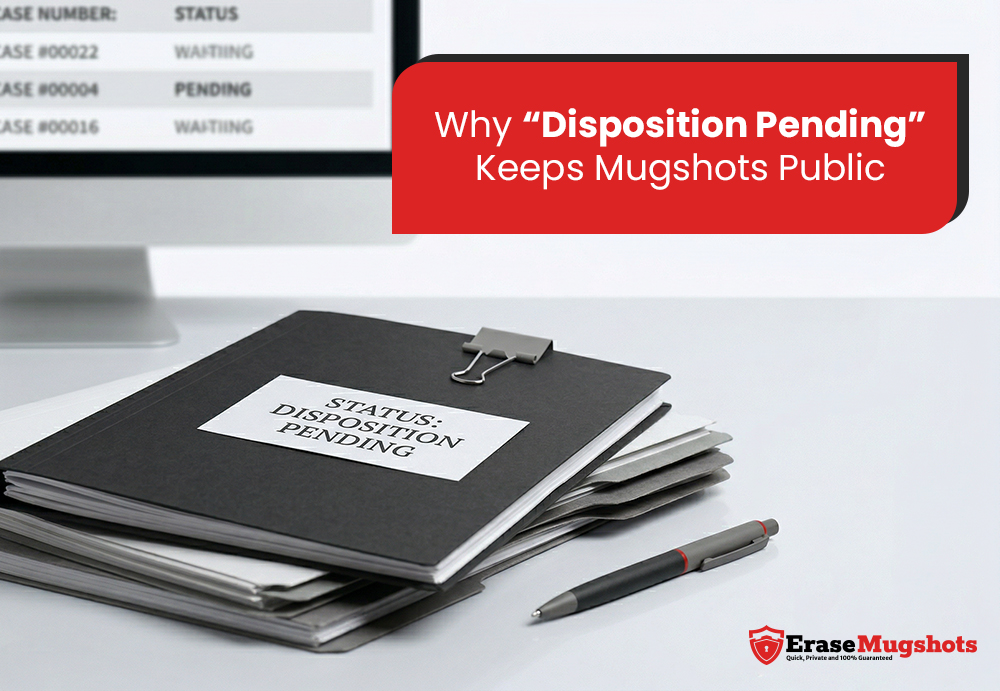
If your case shows “disposition pending,” it means the court has not reached a final outcome. As long as a criminal case remains open, the arrest record is often public. That includes mugshots.
This surprises people because no guilty verdict has been entered. You may not have pleaded guilty. You may not even have gone to trial yet. Still, your photo can remain online.
Understanding what “disposition pending” means helps explain why mugshots remain public—and what can change that.
What “Disposition Pending” Means in a Criminal Case
A disposition is the final resolution or outcome of a criminal case.
Common dispositions include:
- conviction (found guilty or pleaded guilty)
- acquittal (found not guilty)
- dismissed charges
- diversion program completion
- deferred adjudication
- dropped charges
But when a case is marked disposition pending, none of those outcomes has happened yet.
The case is still active in the court system.
A pending status means:
- no final verdict has been entered
- the judge has not issued a final ruling
- disposition and sentencing have not occurred
- the criminal case remains open
In simple terms, the court is still working toward a case’s outcome.
Why Mugshots Stay Public While a Case Is Pending
Mugshots are tied to arrest records, not convictions.
Once someone is arrested, booking information becomes part of public court records. These records exist to document activity inside the justice system, not to declare guilt.
Because disposition pending shows the case is unresolved, agencies and databases treat the criminal record as active.
From a legal standpoint:
- the court case is ongoing
- investigations or hearings may still occur
- prosecution and defense negotiations may continue
- a disposition hearing may still be scheduled
Until the final disposition is entered, the record remains part of the public record. That includes mugshots.
The system prioritizes transparency over privacy during this phase.
Understanding Disposition vs. Sentencing
Many people confuse disposition with sentencing. They are not the same.
A disposition determines the outcome of a case.
A sentence determines punishment after a conviction.
For example:
- A conviction means the defendant was found guilty or pleaded guilty.
- Sentencing information might include probation, community service, fines, or jail time.
- An acquittal means no punishment is imposed.
- A dismissal means charges were dropped due to insufficient evidence.
Not every disposition results in sentencing. If charges are dismissed or the defendant is found not guilty, no sentence follows.
This difference matters because a pending disposition means neither outcome nor punishment has been finalized.
How Disposition Pending Appears on Background Checks
Disposition information often appears on criminal background checks.
In a report, disposition refers to the status or result of a criminal charge. When a case is marked “pending,” employers view it as unresolved.
A pending case can affect:
- employment background checks
- housing applications
- professional licensing reviews
Employers reviewing a candidate’s criminal history may interpret pending status as uncertainty rather than guilt. Still, unresolved cases can raise concerns.
The Fair Credit Reporting Act (FCRA) restricts the reporting of certain non-conviction information to a seven-year period, but pending cases may still appear during that period.
Employers must also follow the Equal Employment Opportunity Commission’s guidance and applicable local laws when evaluating criminal history.
Disposition does not tell the whole story of a case. It only shows the current legal status.
What Happens During the Pending Phase
The pending phase can last weeks, months, or longer. The process is often time-consuming.
During this period, several things may happen:
- court appearances and hearings
- plea agreement negotiations
- evidence review by prosecution and criminal defense attorneys
- participation in a diversion program or treatment program
- scheduling of trial dates
A disposition hearing may occur after arraignment. At this hearing, the defendant may change a plea, finalize a plea agreement, or prepare for trial.
Possible outcomes include:
- dismissal
- guilty plea
- trial scheduling
- diversion program approval
- entry of judgment
Until one of these outcomes becomes official, the case remains pending.
Why Employers Pay Attention to Pending Status
Disposition pending matters because employers rely on accurate information during background checks.
Understanding disposition information helps employers interpret a candidate’s criminal history correctly.
A pending status indicates:
- the case is active
- no final judgment exists
- legal proceedings are ongoing
Employers must balance workplace safety with fair hiring practices. Many jurisdictions limit how criminal history can be used, especially under “ban the box” laws.
Still, unresolved legal status may influence hiring decisions because the final outcome is unknown.
When Mugshots Can Be Removed
Mugshots usually become easier to remove only after final disposition.
Once the case reaches a final outcome, records may qualify for:
- sealing after dismissed cases
- expungement under state law
- record updates reflecting acquittal or dismissal
- removal requests supported by court documentation
For example:
- dismissed charges may allow sealing requests
- successful completion of a diversion program may change the record status
- a vacated sentence can erase a guilty verdict legally
Each state handles these processes differently, and outcomes depend on local law.
Administrative delays can also cause records to remain marked pending even after resolution. Courts sometimes take time to update records.
Common Disposition Outcomes Explained
Understanding different dispositions helps clarify next steps.
1. Conviction
The defendant is found guilty or pleads guilty. Sentencing follows.
2. Acquittal
The defendant is found not guilty after trial.
3. Dismissal
Charges are dropped due to a lack of evidence or legal issues.
4. Deferred Adjudication
The court delays final judgment while requirements are completed.
5. Suspended Sentence
Punishment is deferred until the conditions are met.
Each disposition type changes how a criminal record appears and whether mugshots remain visible.
Why “Disposition Pending” Causes Confusion
The phrase sounds temporary, but it can last longer than expected.
Cases remain pending because of:
- court scheduling delays
- ongoing investigations
- plea negotiations
- clerical updates not yet entered
- postponed hearings
Sometimes a case is legally resolved but still appears pending until records are updated.
That delay alone can keep mugshots public longer than people expect.
What Defendants Should Do During a Pending Case
If your case shows disposition pending:
- confirm your case’s current status with your criminal defense attorney
- attend every court appearance
- follow up with court clerks if updates seem delayed
- keep documentation of outcomes once issued
Accurate information matters. Courts and background check providers rely on official updates before changing records.
This article does not constitute legal advice. Individual situations vary, and local law controls eligibility for record sealing or removal.
Final Thoughts
“Disposition pending” keeps mugshots public because the criminal case is not finished.
The justice system treats open cases as active records. Until a final disposition is entered, arrest information — including mugshots — often remains accessible.
A disposition shows the outcome of a case, but until that outcome is finalized, the record remains in limbo.
Once the court reaches a final ruling, options for sealing or removal may become available. Until then, visibility usually continues, even without a conviction.
Understanding this distinction helps explain why mugshots remain online — and why timing matters more than most people realize.
See What Shows Up When Someone Searches Your Name
Get a free, no-obligation analysis of your exposure — mugshots, arrest records, and everything else a background check might turn up.