Table of Contents
Missing a court date doesn’t always feel urgent at the time. Sometimes a notice gets lost. Other times, someone misunderstands court rules or delays paying outstanding fines longer than expected.
Once a judge issues a bench warrant, however, the situation changes quickly. The legal process moves forward whether the person realizes it or not. Today, the effects extend far beyond the courtroom. A bench warrant entry can trigger consequences across databases, background checks, and online systems long before someone returns to court.
Understanding what actually happens online helps you address the issue early and avoid larger problems later.
What Is a Bench Warrant?
A bench warrant is a court order issued by a judge when a person fails to comply with a court order. Most often, this happens when someone misses a scheduled court date or does not pay fines ordered by the court.
Unlike an arrest warrant, which relies on probable cause that a crime occurred, a bench warrant exists to enforce compliance with court rules.
In simple terms:
- A judge issues the warrant after a defendant fails to appear or comply.
- Court staff enter the warrant into an official database.
- Law enforcement officers gain the authority to arrest the person and bring them before the court.
The warrant stays active until someone resolves it. Time alone does not remove it.
Common Reasons Judges Issue Bench Warrants
Bench warrants are administrative, yet courts treat them seriously. Judges review individual circumstances before issuing one, but certain situations appear repeatedly.
Common reasons include:
- missing a required court date
- failing to pay outstanding fines or fees
- ignoring court orders or restitution requirements
- failing to submit the required legal documents
- violating court-ordered conditions
When a person ignores notice or fails to comply, the judge may issue a warrant to enforce compliance.
How Bench Warrants Enter Online Systems
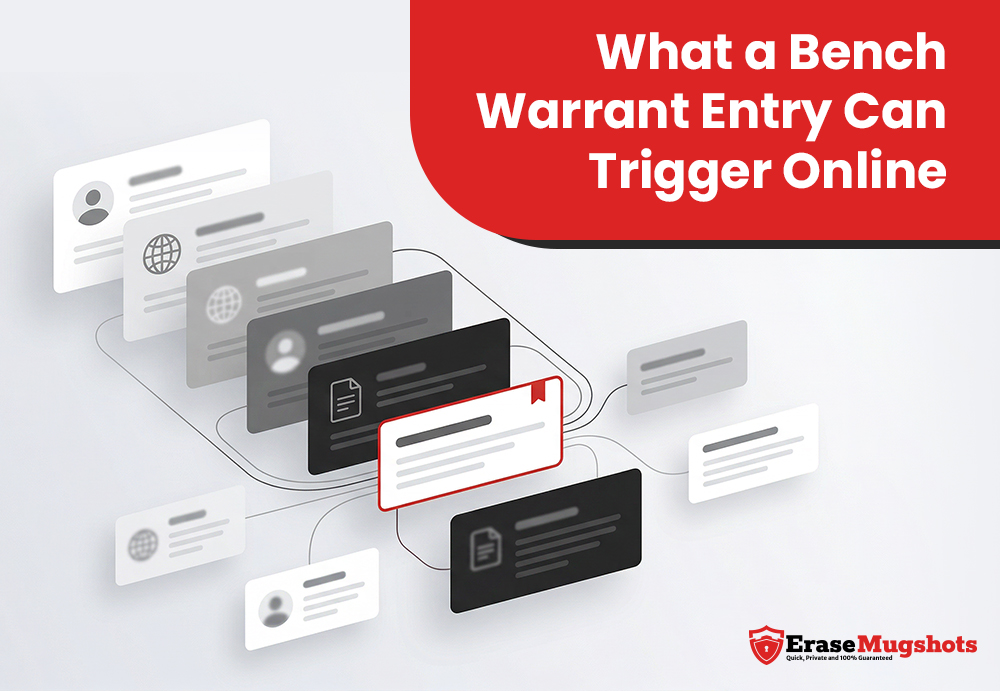
After issuance, court staff records the bench warrant in official databases used by police and government agencies. Law enforcement officers and authorized systems can search these records immediately.
This step matters.
Once entered into a record system:
- officers see the warrant during routine police contact
- agencies can actively search for the individual named in the warrant
- background check providers may include the entry in reports
Because courts attach the warrant to an official record, it becomes part of a broader legal network.
What a Bench Warrant Entry Can Trigger Online
A bench warrant does not mean officers constantly look for someone. Still, it grants legal authority to arrest at any time. That status creates several online consequences.
1. Background Check Flags
Many employers and housing providers review public records during screening.
An active bench warrant may lead to:
- employment delays or denials
- housing application complications
- additional verification requests
Administrative warrants still raise concern because they show unresolved legal obligations.
2. Immediate Arrest During Routine Encounters
Law enforcement databases display warrants during everyday interactions, including:
- traffic stops
- identity checks
- police reports
- courthouse visits
Officers treat a bench warrant with the same urgency as an arrest warrant. If they confirm the entry, they can arrest the individual immediately and place them in custody.
3. Financial and Administrative Consequences
Online systems connected to court records may also trigger indirect problems, such as:
- driver’s license suspension tied to unpaid fines
- additional penalties or court fees
- higher bond requirements
- delays resolving related legal matters
Ignoring the issue usually increases financial consequences over time.
4. Long-Term Record Visibility
A bench warrant remains active until resolved. Because courts attach it to an existing record, the entry may continue to appear in searches or reports related to that case.
Over time, this visibility can affect reputation outcomes when organizations review legal history.
Bench Warrant vs. Arrest Warrant: Why the Difference Matters
Both warrants allow police to arrest a person, but they begin in different ways.
Bench warrant
- issued by a judge to enforce court compliance
- triggered by failure to appear or unpaid fines
- administrative purpose
Arrest warrant
- based on probable cause of a crime
- requested by law enforcement
- supported by evidence presented to a judge
Understanding the difference explains why someone without new criminal charges may still face arrest.
What Happens If Police Arrest You on a Bench Warrant?
When officers arrest someone on a bench warrant, they usually hold the person until a judge reviews the case.
Possible outcomes include:
- setting or adjusting the bond
- paying fines or fees
- Scheduling a new court date
- remaining in custody until proceedings continue
Courts may impose additional penalties if repeated failures to comply occur.
How to Resolve a Bench Warrant
Most people can resolve a bench warrant quickly by addressing it directly.
Common steps include:
1. Contact the Court Clerk’s Office
Ask about case status and required next steps.
2. Consult an Attorney
Legal representation helps navigate the process and may allow a motion to quash the warrant to be filed.
3. Turn Yourself In Voluntarily
Appearing with an attorney often leads to more lenient treatment, such as a new court date rather than extended custody.
4. Pay Outstanding Fines or Fees
Courts may clear warrants issued for failure to pay once payment is completed.
Taking proactive action demonstrates compliance and often improves outcomes.
Why Ignoring a Bench Warrant Creates Bigger Problems
Many people wait because they hope the issue will resolve on its own. It will not.
A bench warrant remains active indefinitely. Ignoring it can lead to:
- arrest at inconvenient times
- increased penalties or bond amounts
- additional charges for continued failure to appear
- extended legal complications
Addressing the situation early usually limits long-term consequences.
The Key Takeaway
A bench warrant represents more than a missed court date. It is a court order that gives law enforcement the authority to act immediately upon contact.
Because courts enter warrants into searchable databases, online systems can trigger consequences long before an arrest happens. Background checks, administrative platforms, and routine police encounters rely on the same underlying record.
Awareness matters most.
If you suspect a bench warrant exists, contact the court, seek legal representation, and begin resolving the issue. Acting early protects both your legal standing and future opportunities.
See What Shows Up When Someone Searches Your Name
Get a free, no-obligation analysis of your exposure — mugshots, arrest records, and everything else a background check might turn up.