Table of Contents
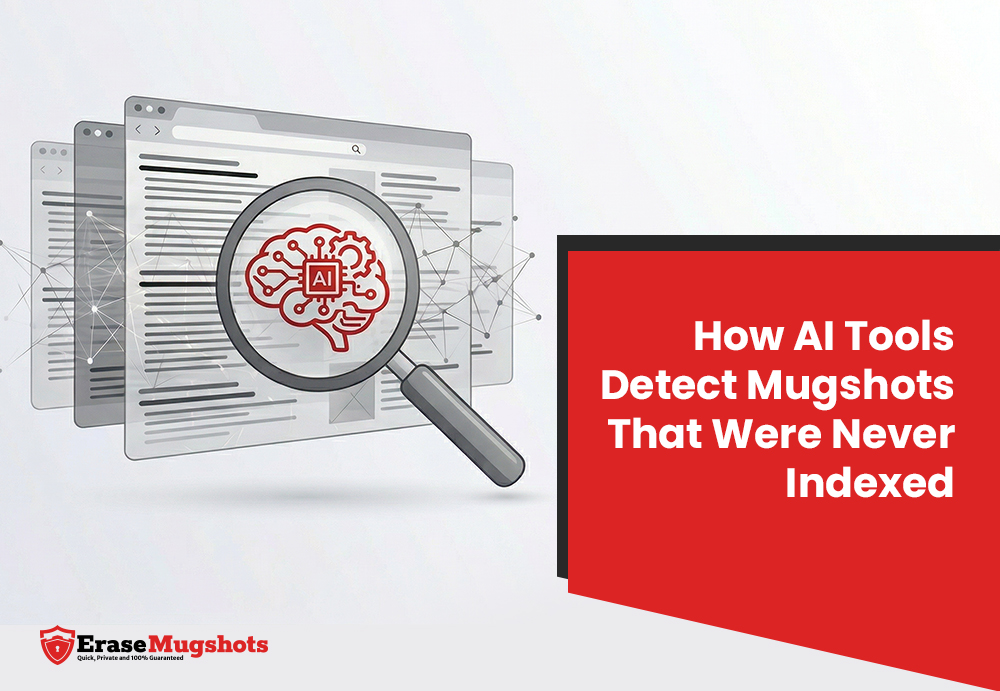
A face can be recognized today even if the photo never appeared on a website, was never linked anywhere, and was never added to a public database. Modern AI tools don’t rely on links, metadata, or web pages. They rely on patterns and advanced machine-learning algorithms that analyze facial features in ways that traditional systems simply cannot.
This is why an unindexed mugshot — something that never touched Google search, search engines, or any known database — can still be matched. The image itself does not need to exist online. The face only needs to resemble patterns the system has already learned through extensive training on vast datasets.
This ability is powerful, useful, and controversial. It can solve cold cases, help law enforcement locate missing persons, and prevent harm by quickly identifying suspects. On the other hand, unchecked errors can also create new risks, such as false positives, privacy violations, and the misuse of sensitive data.
Why Traditional Systems Miss Unindexed Images
Older tools rely heavily on indexing. They crawl pages, collect URLs, and match keywords. If a mugshot never appeared on a site or sat in a local folder rather than on a server, nothing could find it.
These systems search text, not faces.
No upload, no link, no result.
This is where artificial intelligence changes everything by enabling a completely free, pattern-based recognition system that doesn’t depend on the image being publicly available or indexed by search engines.
How AI Tools Actually “See” a Face
Modern systems work more like pattern readers than search engines. They use machine learning models that detect the structure of a face — shapes, distances, and textures — then convert those features into numerical representations called embeddings.
Embeddings serve as a digital fingerprint. Two photos of the same person often produce similar vectors, even when the lighting, angle, or age is different.
The match can happen in just a few clicks. A user uploads a photo into a web-based tool, often one with a simple drag-and-drop interface, and the system returns potential matches. The interface might feel similar to an AI writing assistant, an AI chat, or Notion AI, but behind the scenes, the model compares complex patterns with high accuracy.
The important point:
The mugshot does not need to be online. The face only needs to resemble learned data.
What Makes This Possible
Several pieces work together:
- Feature extraction breaks a face into measurable shapes and key points.
- Embeddings translate those shapes into vectors that capture unique facial features.
- Similarity scoring compares the vectors to the vectors that the system already stores in its database.
This is the same kind of underlying math used in AI image generators, image creation, AI video generation, voice cloning, and even AI content detection tools inside platforms like Google Docs or a Notion workspace.
AI doesn’t search the web.
AI compares patterns.
How AI Finds a Mugshot That Was Never Uploaded
An “unindexed” mugshot could come from:
- an offline device such as a police camera
- a local police system that is not connected to the internet
- old storage media like CDs or hard drives
- a file shared across agencies through secure networks
- a frame pulled from AI video or surveillance footage
And yet an AI model can still detect it because the face resembles data the model has already processed. It may have learned similar faces while training, or from previous images held by agencies.
This is why an unindexed image can still produce a match, even if it never touched the public internet or any known database.
What These Tools Are Used For
AI-based mugshot detection is used for everyday identification tasks:
- confirming identity at checkpoints or during investigations
- locating missing people by matching faces in found footage
- spotting fraud by verifying photos across different sources
- reviewing footage pulled from short-form videos or security clips
The same kinds of models also power tools used by marketing and sales teams, as well as AI apps. They run AI workflows, summarize meeting notes, translate into multiple languages, and support business processes. Many tools share the same foundations, even if their uses differ.
Some platforms offer a free plan, free tier, or free version. Others rely on paid plans, especially when handling sensitive work requiring higher security and support.
Risks and Limitations
AI helps, but it is not perfect. Facial recognition accuracy drops in poor lighting, at unusual angles, or with incomplete datasets. Some demographics experience more errors than others, raising concerns about fairness and accountability.
There is also the question of privacy. Many people do not know their images can be compared this way. And when a tool mislabels someone, the result can affect jobs, investigations, or digital reputation — all without that person knowing an error occurred.
This is why human review is essential. A match should never be treated as final without verification.
How These Tools Are Built and Used
Most mugshot-matching platforms now run in the browser. They feel similar to modern AI software, AI chatbots, or AI app builders. Some include extra AI features such as image generation, video creation, AI avatars, or natural-sounding speech generated by an AI voice system.
A few even function alongside website builder tools or support integrations with marketing campaigns, Google Ads, or other AI-powered systems.
The underlying models may be based on the latest AI models, including those behind Google Gemini, AI Builder, or AI integrations used in enterprise settings.
Why This Matters
If a face can be recognized without uploading, posting, or indexing, posting and indexing are no longer barriers. This strengthens investigations, improves results, and closes gaps traditional systems could not address.
But it also means identity can be confirmed without someone knowing their photo was ever processed, which raises questions about oversight, data protection, and long-term storage.
The safe path is careful use: test, verify, review, and keep humans involved.
AI can support identification — but it should not replace judgment.
By understanding the power and limits of these AI tools, organizations can harness them to enhance public safety and security while respecting privacy and ethical standards. As AI assistance continues to evolve, integrating these capabilities responsibly will be key to balancing innovation with trust.
See What Shows Up When Someone Searches Your Name
Get a free, no-obligation analysis of your exposure — mugshots, arrest records, and everything else a background check might turn up.